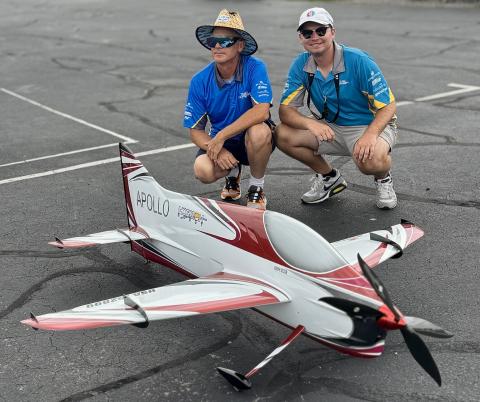
Father-and-son duo, Don and Joseph Szczur, will compete against each other in FAI this week.
By Jessy Symmes
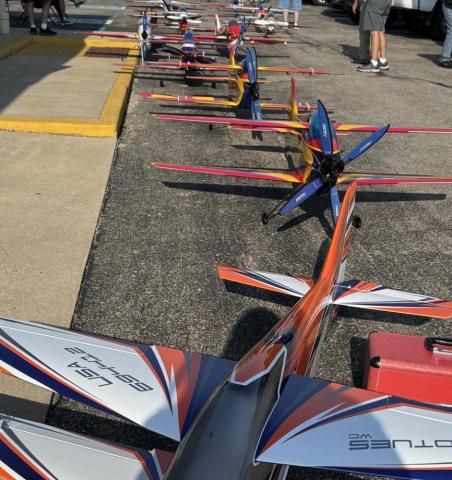
The 2026 National Society of Radio Controlled Aerobatics (NSRCA) Nationals opened today with the kind of day that sets the tone for the whole week: airplanes coming out of vans, pilots walking the flightlines, and everyone sizing up the air before a single official point goes on the board.
Open practice on site ran throughout the day, giving competitors a chance to trim, tune, and get a feel for conditions. Model processing followed, with aircraft checked in and verified against the rules before competition begins. The day wrapped with a pilots’ meeting and an ice cream social, which has become one of the more-relaxed traditions of the event and a good chance for pilots to catch up before the pressure ramps up.
Sixty-seven pilots are entered this year across Sportsman, Intermediate, Advanced, and FAI. That spread is one of the things that make the Pattern Nats worth watching. In FAI, you have some of the most precise aerobatic flying anywhere in the country, where placement, tracking, and rhythm get picked apart maneuver by maneuver.
This year carries extra weight. The event also includes team trials to determine the next FAI F3A team members. For the pilots chasing those spots, every flight this week counts twice, once for the Nats standings and once in the finals for a place representing the United States on the world stage. That tends to sharpen the atmosphere at the top of the field in a way you can feel on the flight line.
Contest Director Don Ramsey is running the show, and flying begins Tuesday morning at 8:00 on AMA sites 1, 3, and 4.
The week is not all flying and score sheets. A mixer is scheduled for Wednesday evening at Elm Street Brewing Company, giving pilots, callers, judges, and families a chance to step away from the field for a few hours. The week closes Friday evening with the banquet at the Horizon Convention Center, held after the finals wrap up, where the awards get handed out and the season’s work finally gets its moment.
Pattern flying rewards patience more than flash. It is a discipline built on repetition, on flying the same maneuvers until they look effortless, and on holding your nerve when the wind shifts halfway through a sequence. Over the next several days, 67 pilots will find out how well that preparation holds up. Bring a chair and watch a few rounds. It is worth it.