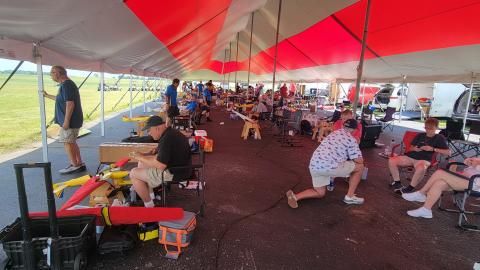
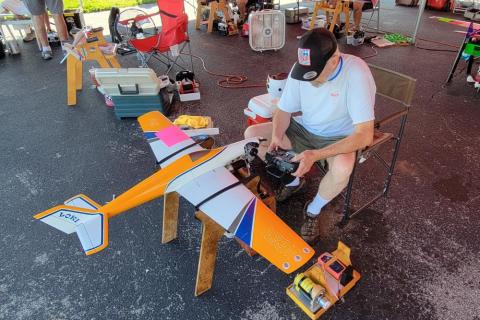
There are a couple of ways to prepare for the final day of competition. If everything’s going well, or if you’ve given up, you will be relaxing. But if you are still solving problems or looking for that last bit of performance, you’ll be working on your plane.
By Tim Lampe
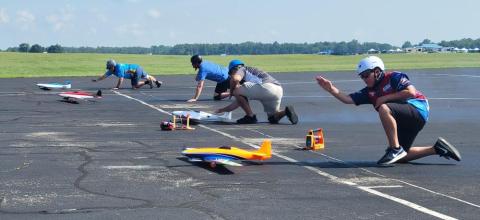
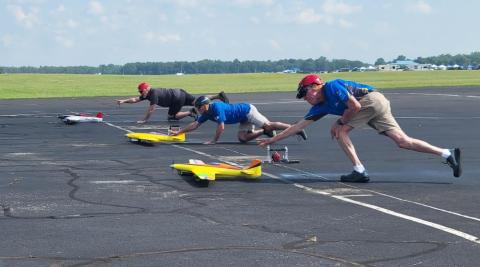
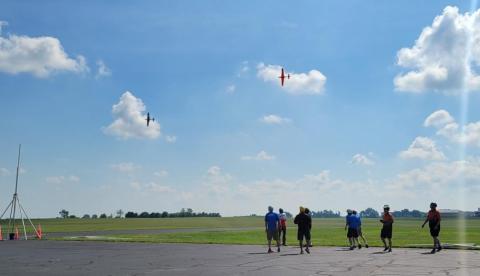
There are multiple angles from which to approach this final issue of NatsNews for the 2026 AMA RC Pylon Racing National Championships. I wish there was a way to convey the intensity, nerve, skill and aggression on display during the actual laps of competition – especially in the Quarter 40 class. Because I am this year’s contributor to Nats News, I had the opportunity to spend extra time out on the course taking photos. This also gave me the chance to watch many of the races up close, giving me a different perspective from when I am actually competing myself.
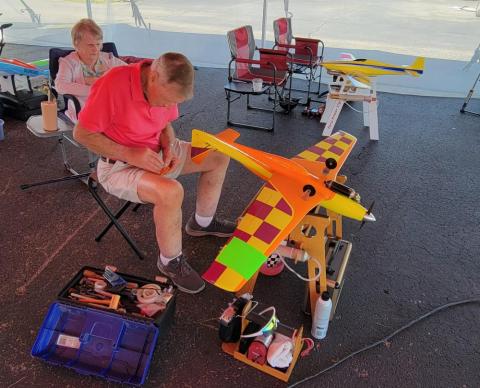
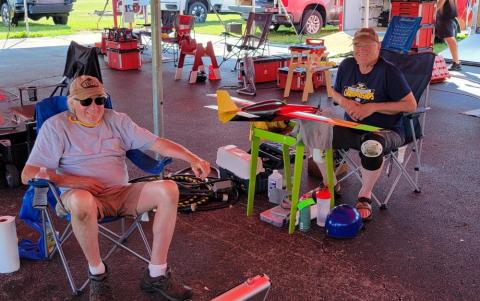
One of the most interesting aspects of pylon racing is how friendly, helpful and passionate the competitors are off the course, while in the pits, or during a road trip, or at the barbecue, or in a restaurant. But in contrast, these close friends and acquaintances flip the switch and lay it all on the line, fiercely competing during the race. You wouldn’t think that simply “flying radio control model airplanes” would be so ferocious, but it certainly can be. In spite of all that, when a race is over it’s high fives, fist bumps and man hugs all over the place.
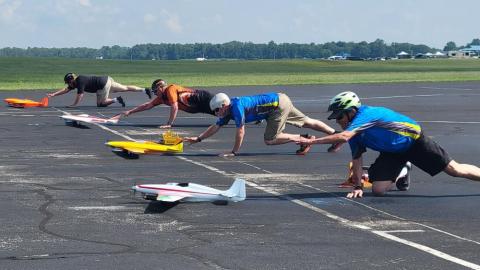
But the Nats doesn’t always end on a high note for everyone. This year, I came home with all my airplanes intact. But it doesn’t always end this way. I lost two airplanes at my first race of the year. The more competitive you are, and the more fierce the competition, the higher the likelihood of losing a model. The two most competitive classes – Super Sport Quickie 500 (426) and Quarter 40 (422) will definitely see the most crashes, because these are the fastest classes and have most of the best pilots. I watch the races and look around and see some of my best friends losing models, so it’s not all roses for everybody. There’s no real way to sugarcoat this or to spin it positively. Losing a plane in a race just sucks.
Another aspect of the National RC Pylon Racing competition is the outright grind of it all. Some competitors compete in only one or two classes. Still, this will have them on site for two or three days. Others spend an entire week on site and compete in all four classes. Personally, I arrived the Friday before competition to assist, and to call for my teammate and friend Trey Witte. My competition was Monday through Thursday, putting me there for a week. Event personnel were there even longer, many camping on location, never leaving the facility. Whatever your situation, the Nats is a grind.
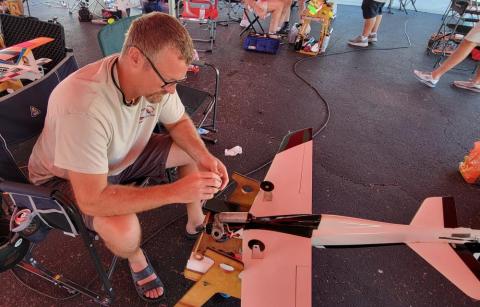
We are all there to do what we love – fly model airplanes competitively, but it’s not easy and not always fun. There is considerable practice and preparation that goes into a Nats event – or any competition for that matter. Aside from the logistics of travel, food, and lodging, one of the first hurdles at the Nats is getting your models processed. This entails inspection for adherence to class specifications and scrutiny for airworthiness and safety. One of the biggest hurdles is practice time, but it’s not really practice, it’s preparation and tuning.
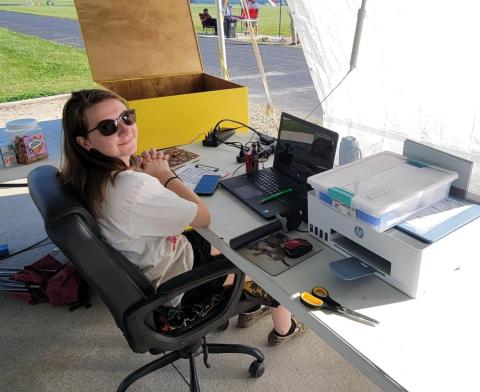
Each event location, be it the east coast, the west coast, or the Midwest, has its particular mix of air which greatly affects the engine setup (cylinder liner and head height) and prop selection. Get these factors right and you should be in the mix. But the only way to nail your setup and prop is to do testing on location. And the more the better. But with so many pilots entering multiple classes, practice time is a premium, adding to the grind I was talking about. You need to fly whenever time is available and this might be in the morning when the sun is low and in your eyes, or when there is fog, or in the evening when the sun is in your eyes again and you probably haven’t eaten anything in a while. Though test flying is a priority, there’s also general housekeeping of your pit to stay reasonably organized, keeping track of your tools, keeping your cooler loaded with ice, balancing hydration, keeping track of when your next heat is, and on and on and on.
The Nats is a grind. But when it’s over, you come away with a feeling of accomplishment. I am pleased with my finish in 426 Super Sport Q500. I started out poorly in 422 Quarter 40, but my teammate and I persevered, kept working, and scratched our way up to a higher spot. But my story is the same as everyone else, even the winner. It never starts out perfectly, but testing and determination usually pay off.
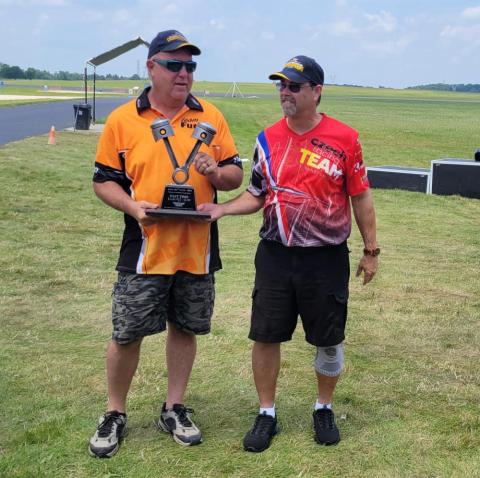
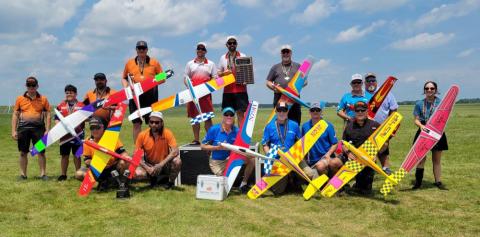
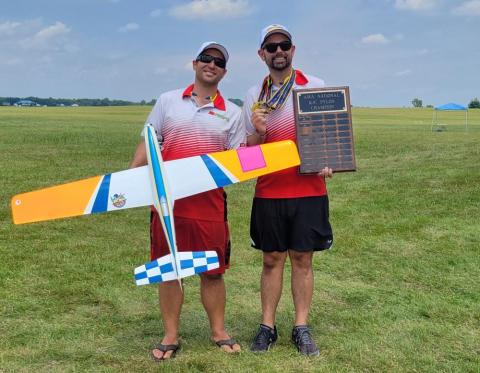
2026 Nats RC Pylon Racing Final Results:
424 Sport Quickie 500
https://www.nmpra.net/lr/2026Nats424_PilotListByPoints.html
421 EF1
https://www.nmpra.net/lr/2026NatsEF1_PilotListByPoints.html
426 Super Sport Quickie 500
https://www.nmpra.net/lr/2026Nats426_PilotListByPoints.html
422 Quarter 40
https://www.nmpra.net/lr/2026NatsQ40_PilotListByPoints.html