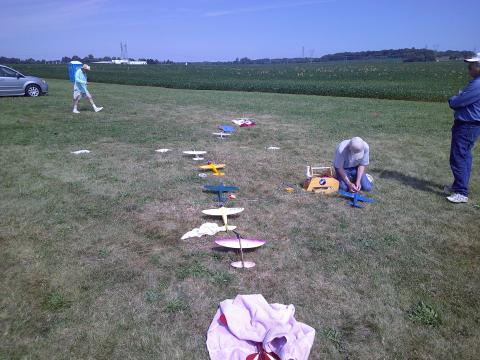
10 Perky planes lined up in the pits, waiting to get flown for their Speed runs.
By John Moll
Today, we wrapped up the last four events for Control Line Speed. We flew 1/2A Speed, 21 Sport Speed, Perky Speed and new this year, PerkE Speed. There were a total of 57 attempts and there were 49 official Flights. That is a bunch of flights for just one day of speed.
For ½A Speed, the motors for these are very small motors. They are .049 cubic inches. That is the same size as you would find in one of those older Cox or WenMac ready-to-fly plastic airplanes. They are flown on a monoline to help reduce drag. Mono Line is a way of controlling the up and down on the planes we fly by twisting the one solid line either clockwise or counter.
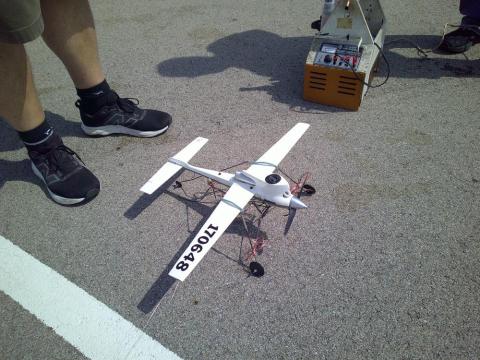
This event was won by Chris Montagino with a speed of 122.54 mph. Bill Hughes captured second place with a speed of 121.9 mph. That is only .64 of a mile-per-hour difference between them. James VanSant got third place with a speed of 102.22 mph. Congrats to these flyers.
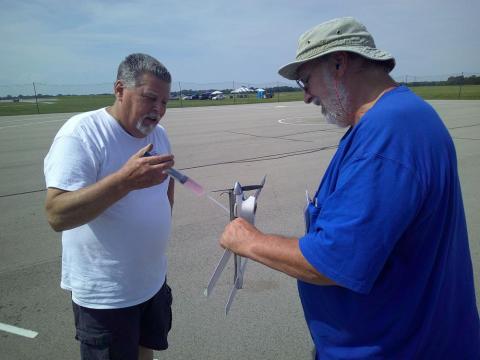
Next, we flew 21 Sport Speed. In this event, you can use only a .21 cubic inch motor. The plane has to be symmetrical in shape. There were six contestants entered in this event. Chris Montagino won first with a speed of 148.14 mph. Bill Hughes came in second place with a speed of 145.09 mph. Glen VanSant got third place with a speed of 139.27 mph. Great flights, guys!
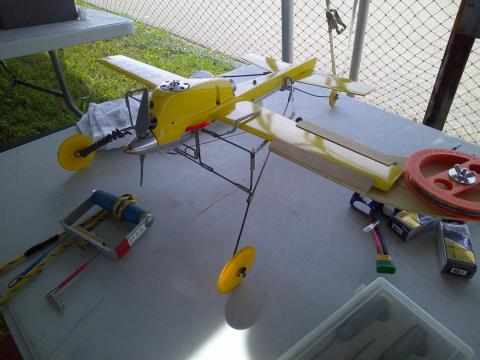
We also flew PerkE which is a new event for this year. The plane is a profile version of the full-fuselage version of the 1949 Perky Speed plane but this version uses an electric motor for power. There is a specific size battery and motor that can be used for power. There was a good turnout for the first year for this event.
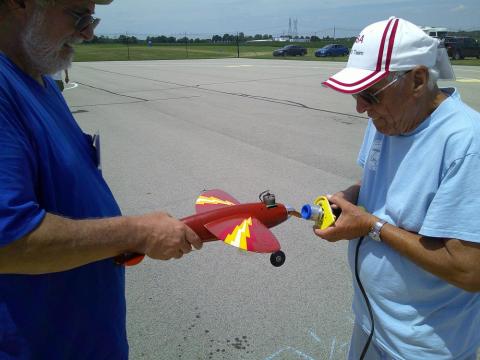
First place was won by David Whitesel with a speed of 83.43 mph. Mike Couts came in second place with a speed of 80.61 mph. Third place was won by Crist Rigotti at 80.44 mph. In this event, as in regular Perky, we see who can win Best Average Speed. That was won by Matt Brown. Great job, guys! Keep this new Speed event growing.
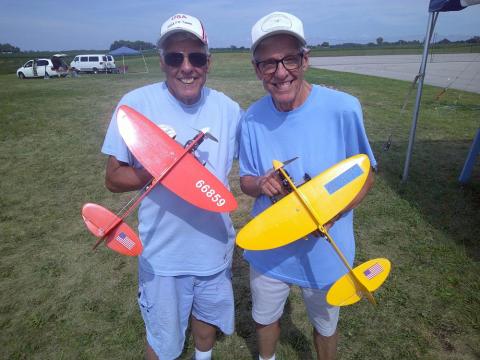
The last event was Perky Speed. There were, a total of 19 planes entered by 10 fliers. You can enter multiple planes by paying for how many planes you want to fly in this event. For this event, you can only use one plane design, that is the 1949 version of the Perky model. You can use any .15 size motor. If you use a spark ignition to make your motor run, it can be a .19 cubic inch size.
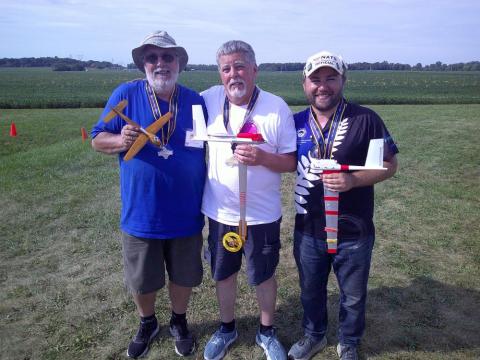
First place was won by Glen VanSant with a speed of 116.4 mph. Second place was Bill Hughes at a speed of 111.53 mph. Dave Whiney got third at 109.43 mph. For this event, we try to see who can get to the closest Average Speed. We add up all of the fastest seeds and then divide by how many planes flew in the event. This year, we added them all up and divided that number by 18. The closest speed was won by John Moll. He (I) got within .58 mph, so I was really close. I was very happy with that result. There are bragging rights to winning this award. There was a Special Trophy presented and an OPS .15 ci motor donated by B & L Hobbies.
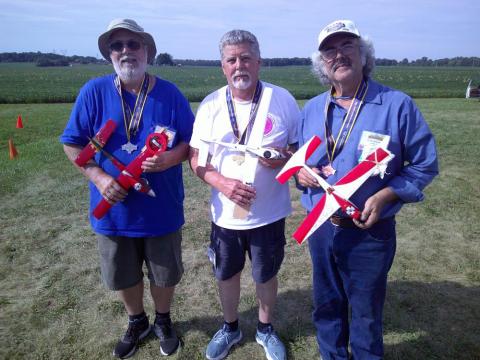
As in years past, we awarded the “DOC” Davis Fastest Jet Speed Award. This award was won by Jeff Gitchel. He went 185.33 mph. Way to go, Jeff.
We also awarded the National High Speed plaque to the flyer who came the closest to any of the AMA speed records. This was won by Chris Montagino. He got a speed within 99.69 % of the Formula 40 Record. Great Job, Chris.
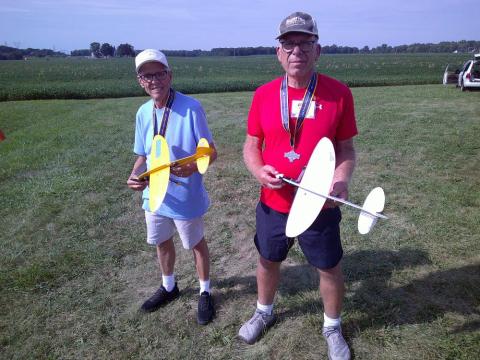
Finally, we present the High Point plaque to the pilot who won the most first place finishes in any of the ten AMA events. This was won by Bill Hughes with a perfect score of 400 points. He was able to win first place in four events. Way to go, Bill.
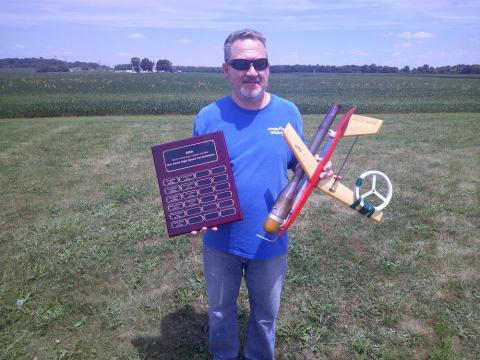
Finally, there are several people I want to say a special thanks to. I want to thank everyone who flew so much and gave me content to write about. We timed all of the 15 different classes using the Transitrace Timing System. This makes any Speed contest very easy to run by not having to use several stop watches. We run 2 computers, one as primary and one as a backup.
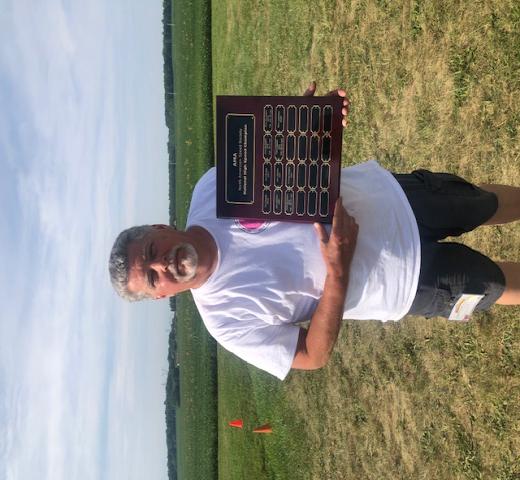
I want to thank Dennis Glasgo, who came each day of Speed to help me run the timing system. He drove here each day from where he lives, just south Of Indianapolis, and back. He picked my brain for as much information as I could give him about Control Line Speed. I told him he needs to show up next year and fly at the Nats.
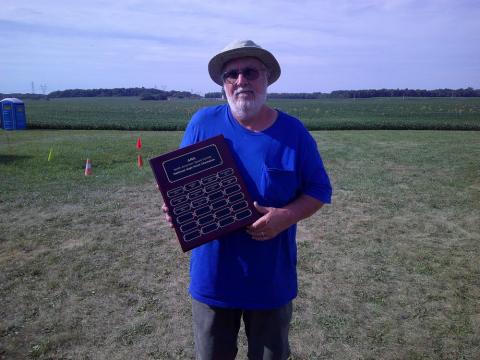
I want to thank all the other contestants who helped me fly my seven planes I entered in the three different events. I flew in Sport Jet, Fox 35 Stunt Speed, and Perky Speed.
Finally, I want to Thank my wife, Lois, who lets me come here for the week fly my toy airplanes. I Love you.
Hope you all enjoyed reading these columns. See you Next year in 2027.