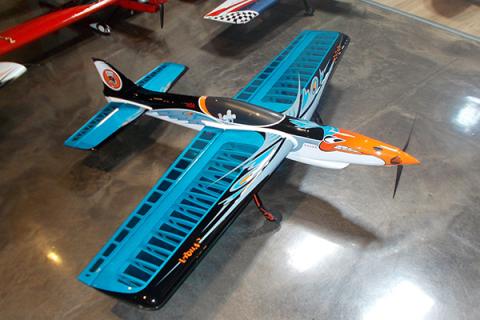
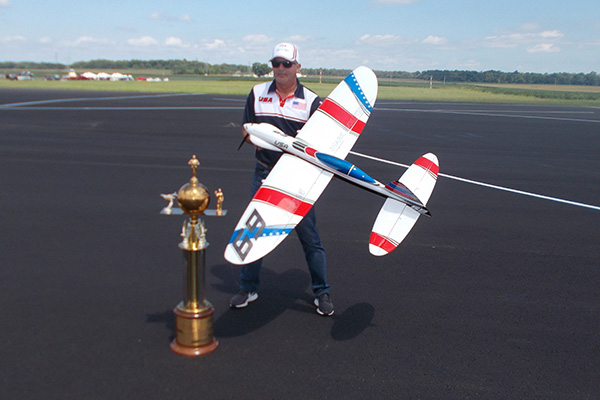
Jim Aron's Symetra at the 2024 Nats. It is a concourse winner.
By Matthew Neumann
This year is marked with several noteworthy milestones. This is the 250th anniversary of the USA, the 100th AMA Nationals, and my 30th Nationals that I will have competed in.
The Centennial Nationals starts off on Sunday July 5 with Control Line Precision Aerobatics, or CLPA for short. This will run on the dates of July 5 through July 10. The event is flown with planes that are mechanically controlled with the pilot holding on to a handle and two lines (usually thin stainless steel cables) going from the handle to the plane. The pilot pivots his wrist, putting more tension on one line or the other, up and down, to control the plane. The object is to do a series of fifteen different maneuvers in a precise manner. The more precise, the better the score. Examples of these maneuvers are three inside and outside loops that are supposed to be round and one exactly on top of another. Points are lost if the loops are egg shaped, have flat spots in them, or you draw a slinky in the air. Square loops are supposed to be that, square. There are various figure eights that, again, are supposed to be round in round eights and square sections in the square eight. Height off the ground is a factor as well, as most of the maneuvers are meant to have a 5-feet-off-the-ground bottom. Higher or lower is a deduction. All this happens while the plane is typically going 50 to 55 mph. You got it. This takes lots of practice.
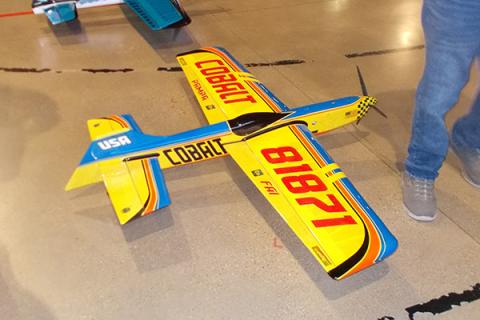
On July 5, we have several unofficial events. They are Beginner, Intermediate, Profile, Classic, and Old Time Stunt (OTS). Beginner and Intermediate events are designed for newcomers to compete with other newcomers. These are pilots who, as the name suggests, are just starting out. The Beginner pattern is not the full, normal AMA pattern, while the Intermediate event does use the normal pattern. Contestants can use any plane they wish. The Profile event is an event that uses the normal pattern but everyone uses a plane that has a profile fuselage. This is a fuselage that typically is ½-inch-thick plank that is cut in the shape of the fuselage. The contestants are not divided by skill in Profile.
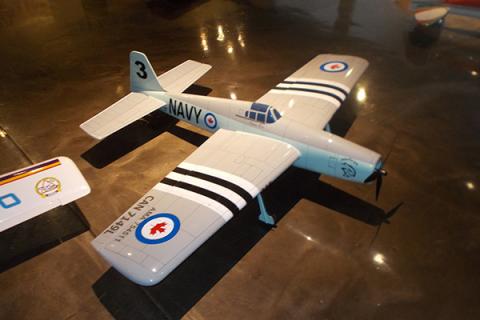
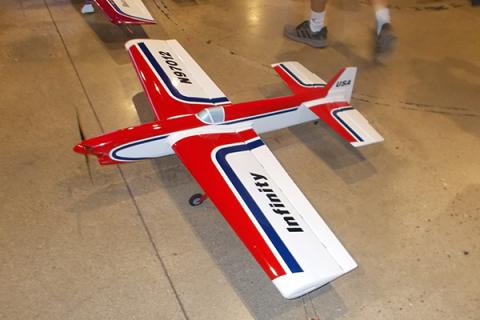
The Classic event is flown, again with the normal pattern, but the planes are replicas of planes that were flown before 1970, and again without skill classes. The final event of the day is OTS, which is flown with the original pattern that was replaced with the current pattern, in 1953. The OTS pattern is a simplified pattern, since the planes of the day were not nearly as capable as they are in the classic era. The planes are also replicas of the time period before 1953. While modern engines and materials are permitted, some contestants go to great extremes to source actual engines and other materials from that time period, trying to make the planes as authentic as possible.
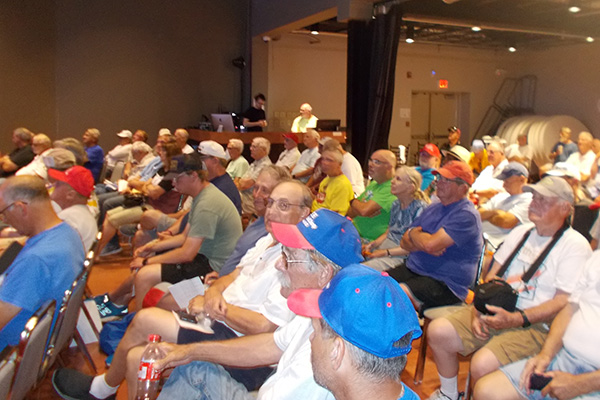
Monday, July 6 is a practice day, except for the afternoon. That is when we have the appearance point judging and pilots meeting. The appearance point judging is when the pilots present their planes to a set of judges and points, from 0 to 20, are awarded. These points will be added to the flight score later on. Sometimes, the total scores have less than one point separating contestants, so the appearance points can be important. If one contestant has one more appearance points than the other, this can mean the difference in placings.
Monday is also the day that contestants will learn their flight orders for the next two days. Contestants are divided into four groups each among the two skill classes, Advanced and Open, with Open being the highest skill class. They are divided with a seeding system to try and keep from having one group loaded down with all “hot shots” and another with not as many. This time is also used as a formal greeting and socializing period among the contestants, since there is no pressure of competition. It is also the time that the pilots will vote on the Concourse award. This is an award voted on by the pilots to determine which plane is the favorite. It is a very prestigious award to receive.
Tuesday and Wednesday, July 7 and 8, are the first two days of qualification. Each pilot will fly two flights and the scores from the best flight of each day will be added together. The top five pilots from each of the four groups in their respective class will then advance to Top-20 day on Thursday, July 9.
On Thursday, July 9, the top 20 pilots from Advanced and Open will fly two flights total. The two scores will be added together to determine the top five pilots in Open and the National winner in Advanced. The top five pilots in Open will then go on to fly in the finals on Friday, July 10.
During the finals, the top five Open contestants will fly three flights each and the top two scores will be added together to determine the winner of this year’s Nationals. We will also fly the Junior and Senior events. The Junior and Senior are age classes. Junior is for pilots 13 and under, while the Senior is pilots from 14 to 18 years old. After the winner of each of the age classes is determined, a fly off for the Walker Cup will commence. This is where the winner of each of the three classes flies three flights each and the best two of three will flights will be added together to determine the winner of the Walker Cup.
Whew! There, that is the schedule of events for the week. It is going to be a very busy week indeed.
What do I expect to happen? The unexpected. That is almost always a given. We usually have at least one “interesting” day of weather. Sometimes, there are multiple days where we have to contend with wind, or rain, or heat, or all three. It is the Midwest, USA after all.
Will everyone's equipment work as planned? NOPE! Over the years, I have seen even the top contenders get knocked out due to an equipment issue. I have seen contestants take a meteoric rise from a “Who is this guy?” to “Watch this guy, he is good!”
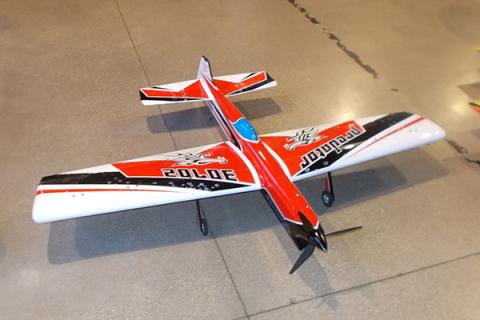
I always look forward to seeing the new planes people have finally finished. I had hoped to be one of those. Despite my best intentions, I am flying a tried and true plane from the past few years. One plane I am really looking forward to is Paul Walker's electric powered B-17. Yes, folks, this is a four-motor CLPA plane that is reported to fly extremely well. Most of all, what I expect to see is a LOT of friendly conversation and comradery… the most important part of this week. Without that, there would not be a Nats at all, or at least not one that would be any fun. If you can't have fun doing something, why do it?