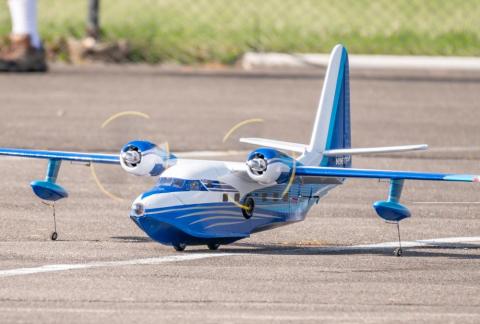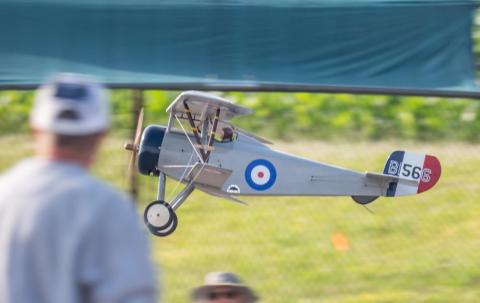
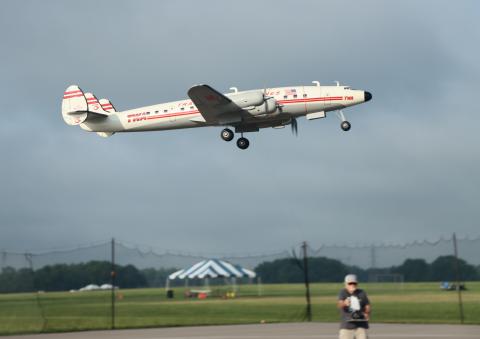
Ed Mason Flying his electric powered Lockheed Constellation.
By Fred Cronenwett
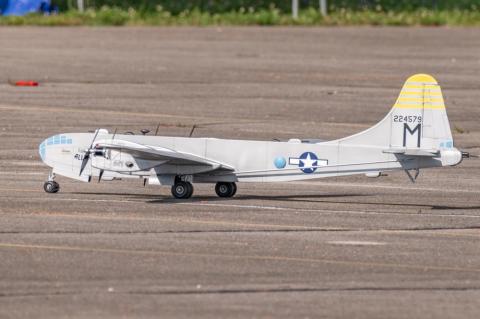
One thing that you can count one with a Control Line (CL) Scale contest is that you never know what the other pilots are going to fly. The definition of CL Scale is that you fly a miniature version of a full-size aircraft. You are judged on how well the model matches the full-size aircraft that you copied and how well you can fly the model.
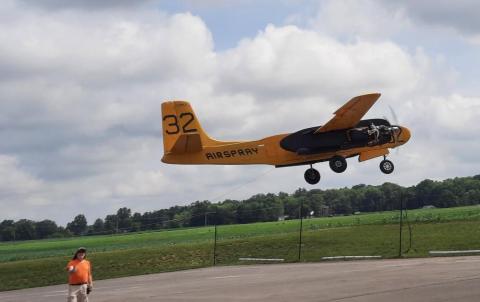
When I say “miniature,” that can be misleading. Some of the models that will show up will be large by CL standards. CL Scale has seen models flown that have wingspans of 8 feet or more, and weighing well over 15 pounds. Keep in mind, the typical CL model is maybe in the 4 or 5-pound range and has a wingspan of less than 5 feet.
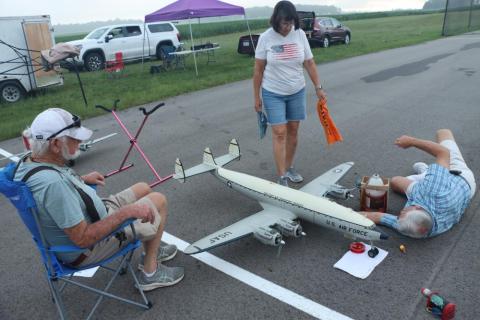
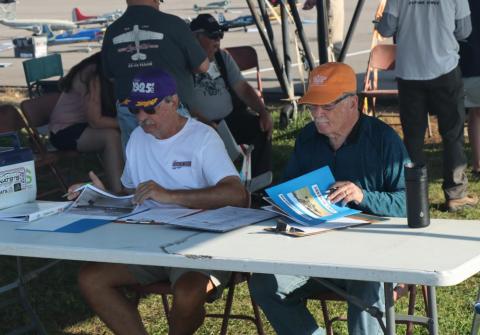
On the first day of the Nats, the models are prepared for the static points. This is where the shape and color scheme are judged to see if they match the full-size aircraft that was copied. The pilot brings a documentation package that includes a 3-view and photographs of the full-size aircraft.

There are also different levels of competition, starting off with Fun Scale, and then Authentic Scale, where the judges will be looking for fully-detailed models. Fun Scale is the only event where an Almost Ready to Fly (ARF) model can be flown in the event. In all of the other events, the pilot is required to have built the model from a kit, from scratch, or from plans. There is one event called Team Scale, where two people enter. One person builds the model and the other is the pilot.
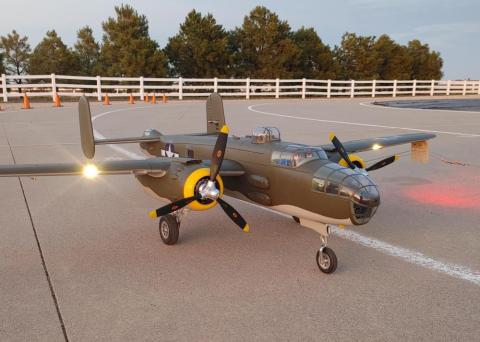
If you like multi-engine models, there are some being prepared to fly. Some models have flaps and maybe even retractable landing gear. CL Scale has been using RC technology for a long time and this includes 2.4 GHz controls, servos, electric retractable landing gear and electric power. So if you see the pilots using a traditional radio control transmitter, that is allowed in the rules. The handle that the pilot uses will control the elevator with a traditional bellcrank (2 lines), but the other features may be controlled with the 2.4 GHz radio unit.
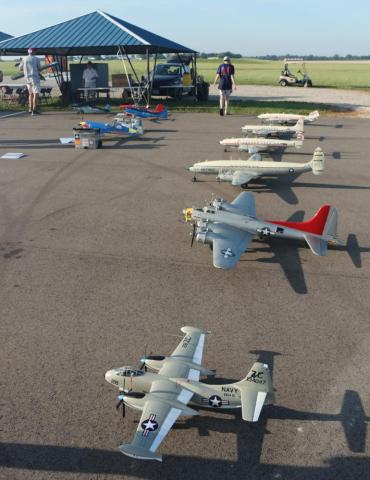
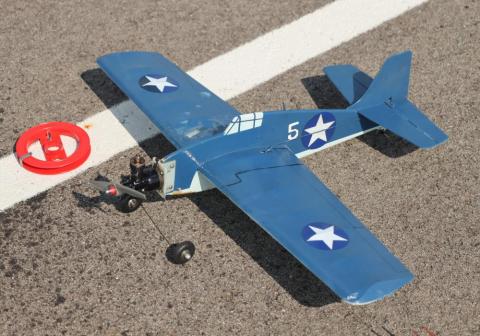
After the Static judging is complete, we will also fly the first flight rounds. There are a total of four flight rounds. The best two flights will be used to determine the overall score. Sometimes the point difference between first and second place will be less than half a point. This means that everything will matter to get that winning score. The standings can and will change when someone puts in a better flight. One pilot might be in first place after the second round. After the round 3 flight scores, they might be bumped down to second place. If you see pilots hovering around the results board, that is the reason why.
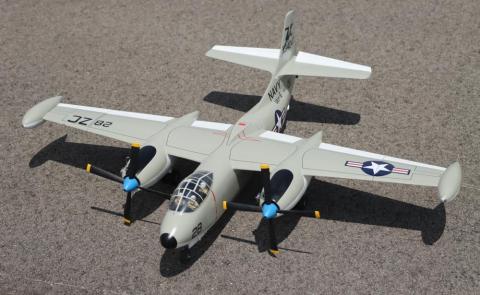
Fun Scale has ten entries, so the competition to put in the best flight score will be intense. In the 1/2A Scale class, there are six entries. This continues to be a popular event. This is where the model is flown with the Cox engines with .049 or .051 cubic inch displacement. The biggest challenges with 1/2A Scale are to get the motor to run properly, put in a flight, and then land when it runs out of fuel.
All of the events are different, but regardless of what your building or flying skills are, there is an event you can fly in. Enter a local contest or the Nationals and you will learn something that will make your next contest go even better.